Friday, May 31, 2013

Book Review: King of Thorns

King of Thorns (The Broken Empire, #2)King of Thorns by Mark Lawrence
My rating: 4 of 5 stars

I like myself a good sociopath. They make things interesting in a world of heroes and anti-heroes if well written. I found a new favorite in Jorg of Ancrath when I read Prince of Thorns and wrote this review.

In the second book of The Broken Empire series, Jorg is now King of the Renar Highlands and he's all grown up. Now eighteen, he's preparing to marry his young bride Princess Miana with an army knocking at his door. The Prince of Arrow wants to roll right over him with numbers Jorg can't hope to compete against, but if there is one thing Jorg is king of besides thorns, it's the long shot.

If you thought the first book was good, this one is better. Jorg has matured. He no longer gets all stabby-stabby if you look at him wrong, and the ghosts he created now haunt him. One ghost in particular is of a little boy that has grown over the years that Jorg has seen him. Jorg doesn't know who he is, but a little copper box holds the secret and he's tempted to open it despite the threat that he might loose his sanity.

But even with the fantastic character development Lawrence has put Jorg through, he still remains the same clever smart ass with questionable morals. Makin, Rike, and Gorgoth are still around. As are the Watch and Coddin. The new character that makes a splash is Miana. Even though she's only twelve, she has a quick mind and is capable of the same ruthless thought process as her husband. As it turns out, she was raised by a card player, and she's not afraid to make sacrifices for maximum damage... I mean gain. (That manages to sound worse.)

Like Prince, Lawrence uses the same structure. There is the present time the novel is set in - Jorg's battle against Arrow - and the past set four years ago after the events of the first book. The flashback story line deals with Jorg trying to help out Gog because the poor leucrota boy keeps exploding into pillars of flame. Jorg knows that he's mostly doing it to save himself, but you know he's attached to the kid. It's one way Lawrence shows the reader that Jorg is growing up.

The flashback also introduces us to his mother's family, who isn't trying to kill him. In fact, he rather likes them and is relieved when he doesn't need to off them for self preservation purposes. The alliance he builds with his grandfather by marrying Miana helps him out against Arrow, and gives the reader more time with his uncle who describes himself as simply "good with horses."

Lawrence does get a bit more complicated this time around by splicing in the memories from the little copper box. They flow nicely, and don't confuse, but I won't go any further for fear of ruining the story behind it.

The little descriptions of the Brothers are spliced in too, punctuated with pages from Katherine's journal. Yes, Katherine is still around, and she's learning the ways of dreams.

Then there is the Builders. In my last review of the first book, I brought up the computer that Jorg and his Brothers believed was a fairy trapped in a box. Now Jorg knows a ghost - a data echo - of a man named Fexler Brews that he met under his grandfather's castle. Fexler is made from the memories and personality ticks of a real person a thousand years gone. He wears a white lab coat and is a bit of a grouch. He bestows Jorg with a gift of Builder tech that relies on the satellites that still orbit Earth, giving Jorg an advantage over Arrow's forces.

Sure, it isn't all easy reading. The dog scene is a bit difficult to get through. I admit, it's hard reading scenes of animal cruelty as I learned when I read Chuck Wendig's Bait Dog, but it is a formative moment in Jorg's young life from before he hung in the thorns. And if you didn't think you could hate his father more, think again.

I could really go on and on about these books. They really were what medieval based fantasy needed. This genre bender is, in truth, its own thing. It can't be squeezed into the little boxes of science fiction, epic fantasy, or post-apocalyptic. If I had to define it, I'd say it's more like Game of Thrones had hot, satisfying one night stand with Fallout 3. But even then it doesn't seem right.

Just do Lawrence a favor and read his books because he is a good writer. A very good writer.

View all my reviews

Thursday, May 30, 2013

Micro Reviews #1

I know I haven't posted anything in a while, but I've been busy. Really busy. Part of that time I've spent running headlong through books without taking a breath. I got through reading binges occasionally.  Most of the time it's material that I probably wouldn't take the time to review, but since this is a book blog (half the time), I will throw down quick thoughts. Lets see if I can keep this a paragraph or two for each book.

Now, to books I will be reviewing. Starting at the bottom.


 So, shall we begin?

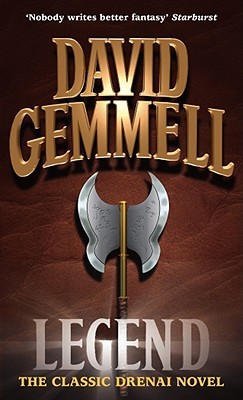
LEGEND by David Gemmell
5 out of 5 stars

This is the book responsible for why most heroic fantasy writers started writing. I can certainly think of more than a few who credit this man with filling their heads with visions of sword wielding heroes and epic adventures. But not the rainbow and puppy dogs kind of heroes and epic adventures.

Gemmell's debut novel deals with an old hero, Druss, who knows that the battle of Dros Delnoch will be his last hurrah, but he goes anyway. Even then, he gives it his all. There is a sad but heartwarming effect to this novel despite its themes of death and destruction. While on a technical level it isn't the best, the content more than makes up for it. Gemmell introduces the hero to take Druss' place and a slew of side characters that are more than their own people. There is a life to this book that I loved, and will now recommend it to anyone.

And to think I bought this UK copy in a California book store for a couple of bucks.


DISCOUNT ARMAGEDDON by Seanan McGuire
4 out of 5 stars

Verity Price wants to be a professional ballroom dancer, but the one thing getting in the way is the family business. Raised in a family of eccentric cryptozoologists, Verity spends her nights helping the things that go bump in the night, not hurting them. When a rep for the extremist Covenant of St. George rolls into town, call him Dominic, she has to find him before he finds what is rumored to be the last living dragon sleeping under New York city.

I have a soft spot for monster hunter urban fantasy, but I get sick of the unending stream of tough women that lead the way. Thankfully this book is more concerned with being funny and kind of sweet. Verity may know how to hide weapons on her body, but she loves her weird family and loves what she does even though it conflicts with her dance career. I liked her because she was spunky without me feeling like I would get stabbed if I spoke to her.

Oh, and Aeslin mice. That alone is worth the price.


ROSEMARY AND RUE by Seanan McGuire
3 out of 5 stars

Meet the first book of the series that pretty much made McGuire's career. After living as fish for fourteen years, Toby Daye has given up being a private investigator and dealing with world her mother is from. Toby is a changeling, a being who is half human and half fae. Her daughter will no longer speak to her, so she spends her days just trying to pay the rent and feed her cats. Then her close fae frenemy Evening is murdered and she is thrown back into fairyland intrigue.

If you like fae lore, these books are for you. They are well researched and well written. Two things that deserve thumbs up in my book. The reason why I gave it three out of five is that Toby is a bit mopey for my taste. I don't like characters who like to throw themselves pity parties even though they have friends who miss them and love them. She shapes up, but it takes a while.


MIDNIGHT BLUE-LIGHT SPECIAL by Seanan McGuire
4 out of 5 stars

Verity is back, and now she has to stop the extra Covenant agents that have come looking for her maybe boyfriend Dominic before they purge the cryptid population. (That may be a bit of a spoiler, but if you haven't noticed by now, I'm prone to those.)

This time around the book is still humorous, but has a bittersweet under tone that breaks up the humor. While the first one had its serious moments, this follow up deals with themes a bit more profound like what it means to try to act human for those that aren't. This series has more comedy than the Toby Daye books, and gets off the ground faster, but McGuire's quality is still there.


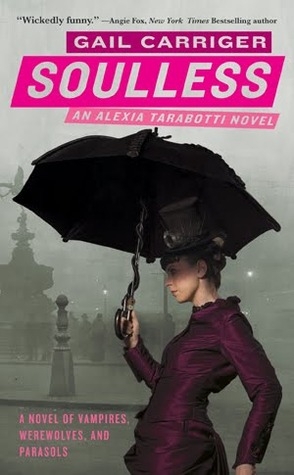
SOULLESS by Gail Carriger
3 out of 5 stars

Alexia Tarabotti is soulless, literally. Her lack of soul cancels out the supernatural in werewolves and vampires, making them human as long as she's touching them. That is the secret she keeps behind the image of a head strong spinster with a brain.

This series is really well loved. I can see why, but at the same time am not wholly enamored. You see, like Boneshaker, there seems to be a lot of style that overpowers the substance. There were chapters where her and her love interest would argue a lot and then make out, leaving me wondering when they were going to look into the disappearances of the rogue vampires and loner wereworlves. The book isn't long, and is wildly entertaining because of the characters, but I'm not going to waving it in people's faces telling them they absolutely must read it. I'll read the next one when I need to replenish my bookshelf.


SANDMAN SLIM by Richard Kadrey
4 out of 5 stars

James Stark was dragged to Hell, alive, by some creepy things his so-called friends summoned up. Now he's back after getting his ass kicked around the pits by all manner of twisted souls.

All I can say is: yes please, may I have another.

When the urban fantasy list is filled with chicks with weapons falling in love with bad boy angel/werewolf/angel/monster-thing, this book is fresh kick in the gut. Yeah, it's pulpy, but entertaining as Hell. (Well, maybe not.) While he is just another hard-ass antihero wreaking havoc, he does enjoy the simple things like clean socks and is doesn't know what a cell phone is. Sure, it drags in the middle a bit when he remembers his dead girlfriend, but if anything that should make women want to at least take a look at it. I'm going to definitely read the next one.


So there you have it. A messy throw down of the books I went through one after another. I'll probably do this again once I have another stack of books that I don't want to spend time writing full reviews on because these are a lot of work.

Wednesday, March 27, 2013

Book Review: Divergent

I wrote this review back in August on Goodreads and said that if I got 100 likes on this review, I would read the next book. Even though I know reading the next book will be torture, I really, really want to make it to 100 likes just to say that I did. So go on over to my review on Goodreads and click the "Like" button if you do.


Divergent (Divergent, #1)Divergent by Veronica Roth
My rating: 1 of 5 stars

Okay, time to get serious. I wish I could be funny like my Mortal Instrument reviews, but my intellectual has kicked in because this book manages to be defined as part of a genre that I have always adored, especially in short stories.

Before I begin, my usual disclaimer that this review will contain logic, griping, complaining, spoilers, and the general deconstruction of everything that the fans hold dear. If you wish to berate me for this, don't waste your time. Nothing you say will convince me. This book is just that bad.

So, my initial reaction was thus:


Dramatic, I know. But not as dramatic as wanting to take a shot gun or lighter to a library book. I'm at least glad I didn't pay for it.

To get into the mood, some foreplay.

Beatrice - the main character - lives in a Chicago where everyone is divided up into six groups. The Abnegation (selfless people), Dauntless (brave people), Erudite (intelligent people), Amity (friendly people), Condor (honest people), and the Factionless. When a child reaches sixteen, they must take a test that will tell them what faction they belong into, but then they still get to pick the faction. Now, each faction has a specific lot in life.

Let's break it down, shall we?

Abnegation: (Noun) The act of instance of abnegating, or denying oneself some rights, conveniences, etc. This is Beatrice's faction. They are supposed to be entirely selfless. They wear all gray, eat insipid food, and everything is considered self-indulgent to them. You could say they are beyond Amish. Oh, and every member of the government is Abnegation. Every member. Yeah. They're referred to as "selfless leaders in government" at one point, but when is it ever smart to have one faction in control? Here is the kicker, they aren't the bad guys. They actually don't do anything wrong that an oppressive regime would do, like make the rest of the factions give up "indulgences" or go to mass every day. They are doormats.

Dauntless: (Adjective) Not to be intimidated; fearless; intrepid; bold. This is the faction Beatrice joins. They are defined as "protection from threats both within and without." They are the security forces of Roth Chicago. The truth is that the Dauntless are reckless idiots. Their transportation is a train that never stops, so they must jump from it. They dye their hair, get piercings and tattoos, and wear tight clothes. They are more like rebellious high schoolers than a militant force. I'll write more about them later since the reader spends the most time with this faction. I'll at least add that they are proof of Roth's lazy writing.

Erudite: (Adjective) Characterized by great knowledge; learned or scholarly. The faction Beatrice's brother, Caleb, joins. The book defines them as "intelligent teachers and researchers." If a society could have and R&D department, this would be it. I'm sad to say that smart people are not depicted well in this story. They are shown to be smug, mean, and power hungry. There are no scientists who understand that scientific break-throughs are a double edged blade; one side will do good and another evil. This faction is the bad guy because they believe the Abnegation are holding back prosperity and progress. That would make sense if their way of going about it wasn't so stupid. Slander and brainwashing never works in the end.

Amity: (Noun) (1) Friendship; peaceful harmony. (2) Mutual understanding and a peaceful relationship, especially between nations; peace, accord. Book defines as "understanding counselors and caretakers." They do the farming and smile a lot. That's the extent of it.

Candor: (Noun) (1) The state or quality of being frank, open, and sincere in speech or expression; candidness. (2) Freedom from bias; fairness; impartiality. Most of Beatrice's fellow Dauntless initiates are from Candor. The book defines them as "trustworthy and sound leaders in law." Yes. They are all lawyers that we know of. They're supposed to be honest people, but they're honest to the point of being rude and come across as being quite judgmental. They also dress like Mormon missionaries because they believe the truth is black and white. How has a faction full of completely honest people not killed each other already? It would be like living with a bunch of Sherlocks in a John Grisham novel.

The Factionless: Those that did not pass the initiation for their chosen factions or dropped out. They are essentially homeless day laborers who are paid in food and clothes. They live in old subway tunnels. No body loves them or wants to be them. The only thing people fear more than being factionless is the prospect of war. No executions or murders or anything like that. Just being factionless and an abstract idea of war. I have a headache now.

Okay, now that we have the basics, what is the economy like? Oh, Roth doesn't tell us. Then what world shattering event led to the formation of the factions? It says they were formed by different people who believed those were the most important traits, but not why? No bad weather. No nuclear war. No civil war. No raising tides. Nothing. Nada. Then why is Lake Michigan an effing marsh? Not only that, but do you know how many cities there are on the edges of Lake Michigan? How are they not fighting Chicago over water if it's scarce?


Okay. Okay. Maybe I'm over-thinking her TOTAL LACK OF WORLD BUILDING. I mean, I've seen more world building in short stories, and the short story format isn't even set up for world building. Despite the little bit of information on the factions, the reader knows almost nothing about this society Roth has set up. None of it makes a lick of sense. If I sat down and mapped out how the different functions interacted and what held them together, there would be squat. It's more entirely dysfunctional than a dystopia. And what makes a dystopia exactly?

I believe this paragraph from John Joseph Adam's Introduction from his anthology of dystopian short stories, Brave New Worlds, sums it up the best:

The roots of the word dystopia, dys- and -topia, are from the Ancient Greek for "bad" and "place," and so we use the term to describe and unfavorable society in which we live. "Dystopia" is not a synonym of "post-apocalyptic"; it also is not a synonym for a bleak, or darkly imagined future. In a dystopian feature, society itself is typically the antagonist; it is society that is actively working against the protagonist's aims and desires. This oppression frequently is enacted by a totalitarian of authoritarian government, resulting in the loss of civil liberties and untenable living conditions, caused by any number of circumstances, such as world overpopulation, law's controlling a person's sexual or reproductive freedom, and living under constant surveillance.

Now, I would love to put almost the entirety of Adam's tiny essay here, but there isn't enough room for it with this stinking word count limit. My point is, Divergence isn't a dystopia.

"But what about Tris being a Divergent, and not being able to see her brother, and being torn from her family? How is that not a dystopia? It's bad!"

Not necessarily. You see, because the Abnegation run the government, technically they can control the other factions, but they don't. They're inept. They actually have no way to enforce the rules that everyone follows. They have no security force of their own, or punishments. This society could not exist because it could not function.

"But the Erudite were in charge! And the brainwashing!"

The Erudite weren't in charge at first, and even then, not everyone would have been behind it. Also, the Abnegation's viewpoint on the world doesn't give them the back bone to push against at least three factions of obnoxious individuals. They should have toppled from power generations ago, but since Roth never gives us an idea about how long her Chicago has been around, the reader doesn't know. This society is not plausible. At. All.

Watch. Get five friends together and each have them represent a faction. Then have Selfless tell Intelligence, Honesty, and Muscle what to do. Think about it. Even the US Armed Forces push back against Congress.

"But she explains all your gripes in Insurgent."

Then let me talk about Tris, the main character.


She is the daughter of an Abnegation government official. She is small for her size and built like a boy. She wishes she was more selfless like her family, but instead lies and wishes vengeance on just about everyone that hurts her. She is a giant hypocrite.

Take her fight with Molly after she's "pantsed" in the dorm. Tris keep's kicking her while she's down out of vengeance. That is just petty and mean. If she keeps wishing she's selfless, that would be a moment where she could demonstrate it. And Al after he apologizes for trying to hurt her, she doesn't forgive him. Tris is a horrible, horrible person. She isn't Divergent. She's Dauntless through and through. She is not selfless, honest, smart, or friendly. She's suspicious, spiteful, and dense.

If she was the least bit pretty, I'd get why Four was into her. But she isn't, so I don't.

And that brings me straight to our hunky hero who is oh, so dreamy. He's a virgin, hot, wounded, and mysterious. He only has four fears. That is why he has a nickname reserved for science experiments. Isn't he the best!


Four has about as much life as a Ken doll. Probably the genitals of one too. His real importance is that he's also a Divergent.

Now I will talk about Divergents and the nuances of Dauntless now that I've brought up Tris and bitched about how this is not a dystopia.

I've already said that Dauntless were crazy people that do stupid stuff to seem brave. Roth tries to make the initiates go through a difficult training regimen, but they only beat on each other. There is no learning of throws, holds, or grabs. No learning of efficient ways to take down enemies without killing them or brutally beating them. Roth doesn't even know that most fights are won in the grapple. It's like she did no research about how to train security based forces what so ever.

It's even more apparent when she brings in guns. Yes, guns. To Roth, they are never rifles or pistols. They are never semi-auto or bolt action. She doesn't even know what a magazine is. Need an example?

"She pushes the bullet chamber open and peers inside. Seeing how many bullets she has left. Then takes a few out of her pocket and reloads."


Unless the gun is a revolver, which is unspecified, the magazine would have to be removed to see how much ammo is left and to reload it. And if I'm running around with a semi-auto pistol, I would try to carry loaded magazines with me instead of individual bullets if possible. Seriously, just the technical knowledge alone was torture to get through. I don't need to know how to field strip a P-90, but at least the basics is needed when you are writing about a militant faction.

And the Divergent thing. Basically, they can't be brainwashed. Roth tries to justify it wish an explanation given by Tris' mom:

"But our minds move in a dozen different directions. We can't be confined to one way of thinking, and that terrifies our leaders. It means we can't be controlled. And it means that no matter what they do, we will always cause trouble for them."

Do you see the problem with that one? Do you?

First off, they are Abnegation. THEY ARE THE LEADERS.

Second, I don't think Roth has ever read 1984, Brave New World, or Fahrenheit 451 where a bulk of the population's way of thinking was quite successfully controlled through fear or bliss. Sure, there were a few outliers, but in two of the three, they were dealt with through discreet means. And the sad thing, all three of those futures have come true in some sense or another. We will never come anywhere close to the world depicted in Divergence.

So, to sum it all up because I don't have enough words to keep going into the massive problems this book has, don't bother. Read The Hunger Games if you haven't yet (even though I thought Collins kind of dropped the ball in Mockingjay). Or you could pick up the anthology I mentioned earlier since it has awesome dystopia shorts written by women like Shirley Jackson, Usula K. Le Guin, and Carrie Vaughn. Or read anything else really.

And if anyone wants me to do Insurgent, I would have to get 100 likes on this review. Even if I do, I can't guarantee this wouldn't happen after I read it.


So it's been fun. I'm going to go bleach my brain now.


Edit 8/16/2013: There is this thing I've been thinking of for some time now. The Dauntless are always trying to have these kids get rid of fears. There is this saying that I think people should keep in mind, "Those without fear is missing a good friend."

If you don't quite understand it, it means that those who are fearless don't have an important survival mechanism. Fear is what stimulates the "fight or flight" response that sends adrenaline coursing through our veins. Bravery is controlling your fear, utilizing it, not getting rid of it. It really bothered me that this book interpreted bravery as the absence of fear. Bravery, courage, is taking a step forward and facing the thing that makes you want to piss yourself and dive for cover.

But fear should also be listened to. If someone says you have to jump off a building to prove yourself, and you know you could die, true bravery would be to look them in the eye and tell them it's stupid and pointless. It's to stand up for yourself.

Take the fact that Four turns down the position that Shower Curtain (Eric) takes over. That was cowardly. It would have been braver for him to take the position so he could protect the students from the corruption. He could also try to dismantle the corrupt from the inside out. Yeah, it's more dangerous, but if this book is supposed to be about utilizing your fear for change, then that would have been a perfect little parallel sub-plot. It's a shame Roth isn't a more talented writer.

Tuesday, March 19, 2013

I Pick A New YA Book to Review

I know I've been quiet in the blogging department lately. I've been busy avoiding being a responsible writer by playing too many video games and working my day job. Recently I decided that I wanted a new YA book to pick apart, so I did some research on Goodreads.

I had a few choices. I could have gone with the loathed Halo or Hush Hush. But since I don't have an angel fetish like many of the people who have read these books, I decided to take a break from heavenly beings winged and feathered, and pick something in the dystopian genre.

I introduce to you Divergent by Veronica Roth.


This little gem seems to suffer from overhype and a rabid fan base. So seeing if it's in the same bad realm as Mortal Instruments will be fun. Who knows, it might be good. We'll just have to see. From the research I've done, the writer says she liked Mockingbird by Suzanne Collins and I thought that book was just so-so. That is not a good sign my friends.

For blow by blow updates, follow me on Goodreads.

Sunday, February 24, 2013

Book Review: City of Glass (Mortal Instruments #3)

City of Glass (The Mortal Instruments, #3)City of Glass by Cassandra Clare
My rating: 1 of 5 stars

FINALLY! It's over! I'm done with the original Mortal Instruments trilogy, and it feels so good.

Now, before I begin, I will be courteous enough to inform you all that the following review is filled with whining, griping, and spoilers. If you love anything about this series, read at your own peril. I am not responsible for any strong feelings that my ravaging of these books trigger.

Before you read this, please read my reviews of City of Bones and City of Ashes because I will be most likely reference past jokes. You could say I'm consistent, unlike Clare.

Last time on the Mortal Instruments: Jace gets thrown in jail for being a smart ass. Daddy V steals the Super Special Sword of Truth and then gives it after-market blood mods so he can raise Hell, literally. Simon gets turned into a sun-proof vampire. Clary goes Super Mary Sue and blows up a ship. Other than that, those 500 pages were worthless.

Sigh. If I wasn't shaking my head during this book, I was screaming at it. You would have thought I was watching a horror film. The last couple chapters I read on auto-pilot, not even caring to scribble down some notes. I'm done this series, and anything else Clare writes.

Before I chase people off with my dour attitude, it's time for the Character Breakdown!

Clary: I get that she's a 16 year old girl, but after thousands of words, she's still clueless, rash, and bitchy. When Jace and the rest of them leave her behind for Idris, she throws a temper tantrum like a toddler. Then she makes her own Portal to Idris, ignoring the rule that she needs permission to do so, and drags Luke with her. After splashing down in the Mortal Mirror (because Clare couldn't be more obvious that was what Lake Lyn was), Luke's poor sister Amatis saves her life from the freaky water. And then Clare proceeds to treat Amatis terribly. She eats her food, wears her clothes, sneaks out, and destroys her property without so much as a thank you. That poor woman gets no respect from Special Snowflake Clary.

Then there is the treatment of her mother. She spends books worried about her, and then freaks out when Jocelyn walks in the door like the woman abandoned her. Clare tries to use the excuse that Clary just didn't know how angry she was. As a young woman who loves her mother, I would have given her the biggest hug because she's all right. Then proceed to grill her on what was going on. But my point is, I wanted to slap that pubescent red-head and scream, "Bitch! Don't talk to your mother like that."

The one thing that really bugged me is when Clary reveals her special rune making skills to the Shadow-hunters and Down-worlders. (Yes, I grammatically corrected those.) Clare specifies that Clary gets her Super Scribbles from the angels because daddy experimented on her by accident. (I just realized how lame that sounds.) Clary tells the crowd gathered that she creates the runes. Yes, creates the runes even though we, the audience, knows that she does not create them. She's just "remembering," for lack of a better term, runes that have been forgotten to time. I didn't think I could get more depressed until everyone gave her credit for finally uniting the SH and DW after a thousand years. Um, no. Just, no.

The truth is, the Shadow-hunters were just too afraid and jealous to form a real bond with the Down-worlders. A real relationship. It felt like they jumped on the opportunity as an excuse because they got super-powers out of it. That does not repair the damage caused by hunting these people for hundreds of years. And they give Clary the credit. Fecking Shadow-hunters.

And then there is her one wish. What does she wish for? Jace, because daddy ran him through a sword. I know Clary isn't that bright, but as an artist, couldn't get creative. Clare kept shouting at us that Clary is an anime and manga fan. So why not rip off one of the mass resurrection wishes from Dragon Ball Z? All you need is a little modification: "I wish for all those killed in the last week by Valentine and his agents to be returned to life. Except the evil ones." Okay, there might be problems with that, but it would be worth a shot. It's better than just Jace because the Lightwoods are missing a certain little boy. What was his name again?

Moving on.

Jace: He's come a long way from being one Ed Hardy shirt away of being the douche in the corner of the night club you roll your eyes at. Sadly, instead of developing into a better person, he just grew more dramatic and boring. I don't know how that's even possible. It's almost like his personality was sucked out of him by all the similes Clare used. (I know. I almost lost my sanity to them.)

There's this scene where Clary catches Jace making out with another girl, and then they have a fight. Clary leaves, leaving him with Alec and Izzy to have a nice talk. At the end of their conversation, Jace gets angrier and punches a picture window. Do you know how expensive those are to replace? He's was being such a Drama Queen, feathered boa and all. It was painful to read, and not in the good way.

After that it was all down hill. By the end of the book, Jace feels like a generic tragic hero. He tries to show his girl how much he wuves her. He goes it alone, tracking down the bad guy. He kills his evil twin, and then gets killed by daddy. Oh, boo-hoo. Poor, [Insert Hero Name]. It was just... meh. I actually missed Jackass Jace. There was substance I could make fun of.

And Former-Shadow-of-Himself Jace finally hooks up with Clary, for good. Don't care.

Oh, and Daddy V isn't his father. He was cut out of his suicidal mother's womb after she killed herself. And he's got angel in his genetic code. Like I didn't see that one coming...

Simon: He is my favorite of the three, hands down. Despite the issues he has coming to terms with being a vampire, which is understandable, he's still the smartest and most mature. He's also the only one who sacrifices anything.

When Raphael wants to kill him in exchange for the help of the vampires, Simon goes but tells Clary to put the Mark of Cain on his forehead. While this may curse him to wander for eternity, he doesn't care. He wanted to live - well, as much as a vampire can live - and unite the vampires with everyone else. Despite the deception, Simon gets two thumbs up for courage. He really is too good for this book, especially since he was in jail for 200 pages of it.

Isabelle: By this point she's just Jace's mouth piece. Jace never tells any one any thing, so Izzy does it for him in skirts and hooker heels. I feel bad for her. By the end she's Jace's knight in shining armor. Not Clary. His adopted sister protects him and saves his ass more than anyone notices. Clary is totally the wrong MC for this story. I'm sorry how your writer treats you, Izzy.

Alec: Gains a spine a little too late. I wish Clare had given him substance two books ago. I do get why Magnus likes him, though. He's boring. I would want boring too if the rest of my life was glitter and chaos.

Magnus: There wasn't enough of him to save my sanity. I often missed him. Good to know he's capable of somber behavior.

Jocelyn: Finally wakes up, thanks to Magnus. Acts as giant info dump. Wasn't really given a personality for a woman who escaped her abusive husband, lived in hiding, and raised one of the most self-centered people in the book.

Luke: Mostly in the background even though he does all the political heavy lifting. They give Clary the credit. Feh. It's this guy who deserves it.

Amatis Herondale: Luke's sister. Puts up with Clary's abhorrent behavior. Of all the people in this book, she deserved to give that brat a beat down. First wife of Jace's father. She's nice and supportive. Too bad her writer doesn't pat people on the back who deserve it.

Sebastian: Will the real Jonathan Morganstern please stand up? This psycho is the demon child of Jocelyn and Daddy V, which makes him Clary's real older brother. He was a better baddie than his father because he was scary. When a teenager beats a nine year old to death with a hammer, I admit I wouldn't want to meet him in a dark alley. That's horror flick shit right there.

Of course, Clare wouldn't know how to describe a creepy smile if she tried. She can't keep the damn similes off the end of the sentence to make it effective. And then there's the dark prince metaphor that Clare keeps using every time she writes about him from Clary's perspective. Here is the funny thing about dark princes, they are always bad, bad news. Very bad news. I'll list a few off the top of my head that quite a few people might know about:

Prince Joffrey from Martin's Song of Fire and Ice books: I don't think I have to explain this one to anyone who's seen the HBO series or read the books. Joffrey is horrendous. This pretty little blonde pre-teen puts Sebastian to shame in the violent-acts-that-make-people-squirm department. He beheads people left and right, has Sansa smacked around by his cronies, and likes it. He's just... pure evil. That's all I can say.

Prince Jorg Ancrath from Lawrence's Prince of Thorns: Another young psycho, except he has goals. There is nothing like someone who will do whatever they want to get what they want, and that includes raping women and blowing up whole freaking castles. He also stabs his own men. There is really nothing like young Prince Jorg, except maybe Alec from A Clockwork Orange.

And because Clary likes anime, and I've been using Dragon Ball references pretty consistently, I give you Prince Vegeta: This walking Death Star gets off eradicating entire civilizations. Beating on people excites him. He killed his childhood nanny - I mean body guard - because he suddenly became useless. Even after becoming the world's wealthiest trophy husband, he nuked half of a sold out stadium to get his rival to fight him after juicing up on black magic.

So you can see why Clary's romanticized version of her "dark prince" immediately made me think, "He's evil! Evil! Run, stupid!" Seriously, Clare's logic when it comes to writing has shorted out my brain more than I want to count. No mental acrobatics will compensate for whatever goes on in that woman's head.

Daddy V: Sigh. Clare gave him a personality a little too late. It's book three, and we're just now finding out he's the well meaning, mad scientist type. Too bad the path to Hell is paved with good intentions, because that is where V is going to end up. When an angel looks at you and basically says, "You are not God, you cannot judge," then you know you're screwed.

That's what happens to V, and I must say that I pitied him. It was almost sad, if a bit pathetic. I wanted to reach through the pages and say, "Dude, you messed up. Time to face the consequences." I think I felt more for him than I did for any of the other characters in the book. If Clare was capable of good character development, then he wouldn't have been made of cardboard for two books before finally being fleshed out.

How do reader's connect with these characters? Hold on, I have to reboot my brain. I thought too hard again.

Now it's metaphor time! Prepare yourself for the worst that I cared to write down. 3... 2... 1...


  • "... she spotted a smaller mausoleum, growing like a white toadstool in the shadow of a leafy oak tree." Does that mean the mausoleum looks like a mushroom?
  • Referring to the demon towers: "The fading sunlight struck dull rainbows from their surfaces like a match striking sparks." I think I got it with the "dull rainbows."
  • "... the world was coming apart in soft colors, like a jigsaw puzzle drifting on the surface of the water."
  • "The chuckle that answered Simon sounded like metal scraping against stone." That sounds painful for the person making it.
  • "... all she could see was the bright bits of sunshine that dusted his fair hair, like shards of broken glass." This woman has a fetish for broken glass. If this book was mine, I would have highlighted every broken glass reference to see how often it came up.
  • "... a sudden spray of broken glass like a shower of jagged stars." Look, another one.
  • Referencing Alec's eye color: "At the moment they were the color of the East River during a storm." I'm not from New York City, so how would I know what that looks like?
  • "Clary woke to a sound like hail stones on a metal roof." She's describing Sebastian throwing rocks against the window. Having heard both, they sound distinctly different. When rocks hit windows, it makes a hollow noise. When hail hits metal, it's more metallic and high pitched.
  • "Pages ripped from books drifted in the air like ash." If time has passed, how is this possible?
  • "Sebastian's face came alive, like a video flashing back to action after it had been paused." And all these terrible comparisons are wearing me out, like a tire that has been driven hundreds of miles.
  • " ... like a beautiful painting destroyed by vandals." I swear I've seen her use this one before.
  • "The desire in his eyes cracked into a thousand pieces like the shards of the Portal mirror a Renwick's... " Told you she had a thing for broken glass. She's even made voices sound like it.
  • "Isabelle's whip came alive in her hand like the flaming sword of an avenging angel..." This is another comparison that Clare uses often. She uses it so often, I'm going to card her for repetition.
  • "With a sound like a pail of water poured onto flames..." She couldn't use "with a hiss?" It would make the sentence eight words shorter and make more sense.
  • "The tension underlying his voice was a live wire." If something is tense, it's taught or wound. There is nothing loose about it. It's under strain. A live wire is none of those things.


Relieved that it's over? There's more! Check out this review where they attempt to figure out the percentage of word count that the bad similes, just the similes, take up. It's a pretty hefty 27%. Wow. And the review is funny.

Now onto a more serious analysis of her writing. Below I'm going to post they typical Clary thought process paragraph. Why? Because this is typical of how Clare likes to write her descriptions and keep the character involved.
"They passed under a streetlight. Clary glanced sideways at Sebastian. In his long dark coat and white shirt, under the pool of white light, he looked like a black-and-white illustration of a gentleman from a Victorian scrapbook. His dark hair curled close against his temples in a way that made her itch to draw him in pen and ink."
First off, Clary is looking at him out of the corner of her eye while they pass briefly under a light post.

Then she gives a typical simile that is both long and tries to sound poetic, but only hampers the sentence.

And the last bolding is what I like to refer to as a Clary thought. It is a thought that is entirely unrelated to anything in this section. I know that she's an artist, but we only see her draw runes in this book. She never sits down to sketch so she can clear her mind as the Shadow-hunter apocalypse looms near. This kind of Clary thought happens a lot in all three books. She's always like, "I would draw so and so this way... This person would look good in [insert medium]... I would use [insert technique]." Since we hardly see her in the act of drawing, it just feels like Clare is trying to show off.

Same goes for the dump-truck of similes. She uses them to make her writing sound poetic, but seems to miss the point of metaphors. She either describes something so much she kills the scene, or not enough. Her writing lacks balance in that sense. It's either overwritten or underwritten. The sad thing, there is an editor listed on her Acknowledgements page. Remind me to never have the person look over my work.

All right, time to move onto another aspect of writing; world building. I would like to list some weak world building points that made me scratch my head:

If the towers keep out demons, and Down-worlders have demon energies, then how come Down-worlders can get into Alicante? I'm probably thinking too hard about this one. It just keeps bothering me, especially since Sebastian was only part demon as well.

Guns, cars, or any electronics don't work because of runes. All of these things require a spark. So, do runes prevent the creation of a spark? If so, then that would make combustion impossible, or any standard heat source that uses fire or electricity. Clare writes it off saying no one knows why, but that's pretty lazy writing. I mean, they wouldn't be able to heat food. Even in Harry Potter there was a flying car.

Then there was Clare's weapon knowledge. It's obvious she has no idea how they're even kept on the body. Every time she describes a Shadow-hunter, she says they have a belt with a bunch of weapons thrust through it. The position of the weapon on the body matters because that person has to draw it out in a battle. It needs to be easily accessible depending on the fighting style. No boot knives. How about bandoliers? I guess no one uses a claymore. And if Izzy's whip is razor sharp, why does she loop it around her arm? It would cut her. Clare throws out fancy weapon names, but then fails to describe them. For a bunch of fighters, these Shadow-hunters come across as pretty inept when it comes to weapons.

And as for the ending, it works. I just feel like it too long to get there. If you think that every book is roughly 150k a piece, with about 25% of the word count being similes alone, then these books could have been shorter with a good edit and still retain their pacing and most of the story line.

Anyway, I give this book 1.5 stars. I thought about two, but just couldn't bring myself to do it. If everything sucked but the characters, than I would probably give it three. But the characters is the series' biggest problem. The two main ones are just... frustrating.

I'm going to find something better to do. If time is kind, maybe I'll forget I ever read this.

View all my reviews